 Call Us : 08045478712




- Company Profile
-
Our Products
- Transformer Radiator
- Swan Neck Type Radiator
- Press Steel Radiators
- Transformer Pressed Steel Radiator
- Swan Neck Radiatiors
- Direct Weldable Type Radiators
- FA Type Radiators with Flange
- Transformer Radiators
- Stainless Steel Radiator
- Electrical Transformer Radiators
- FA Type Radiators With Graded Elements
- Heavy Duty Transformer Radiator
- Pressed Steel Radiator
- Steel Radiators
- Special Design Radiator
- Flange Type Transformer Radiator
- Radiator For Power Transformer
- Electric Power Transformer Radiator
- Swan Neck Radiator
- Radiators & Accessories
- Max Cool Pressed Steel Radiators
- Power Transformer Radiators
- Tepl Flange Type Pressed Steel Radiators
- Industrial Transformer Radiators
- Tepl Direct Weldable Type Pressed Steel Radiators
- Extra Rippled Transformer Radiator
- Radiators For Power Transformers
- Wide Radiator For Power Transformers
- Power Transformer Radiators
- Dry Type Transformers
- Transformer Components
- Oil Cooled Transformer
- Fuses-Circuit Breakers & Components
- Circuit Breakers
- Onload Tap Changer (OLTC)
- AVR
- LT Distribution Panel
- Nitrogen Injection Fire Prevention System
- Transformer Radiator
- Our Project
- Our Gallery
- Certificates
- Contact Us

 Send Inquiry
Dry Type Transformer
Price 300000 INR/ Piece
MOQ : 1 Piece
Dry Type Transformer Specification
- Rated Voltage
- 11/0.433 kV or as required
- Load Loss
- According to IS 1180 & IEC standards
- Standard
- IS 11171, IEC 60076
- Dimension (L*W*H)
- According to capacity (Example: 1700x1200x1600 mm for 1000 kVA)
- Operating Temperature
- Up to 115°C rise
- Cooling Type
- AN/AF (Air Natural/Air Forced)
- Low Voltage
- 400 V/433 V
- Coil Material
- Copper or Aluminum
- Capacity
- From 50 kVA up to 2500 kVA
- High Voltage
- Up to 33 kV
- Voltage Booster Type
- Step Down/Step Up
- Product Type
- Dry Type Transformer
- Material
- Copper/Aluminum
- Output
- Customizable according to requirement
- Frequency (MHz)
- 50/60 Hz
- Efficiency
- 98% or higher
- Phase
- Three Phase
- Usage
- Industrial Power Distribution
- Coil Structure
- Toroidal
- Coil Number
- Multiple windings
- Power Scope
- Up to 2500 kVA
- Weight
- Varies with Capacity (Example: 1500 kg for 1000 kVA)
- Noise Level
- < 65 dB at 1 meter
- Insulation Class
- Class F / Class H
- Winding Connection
- Dyn11, Yyn0 or as specified
- Duty Cycle
- Continuous
- Core Type
- CRGO M4/M5 Grade Laminated Core
- Short Circuit Impedance
- 4% - 6% (typical)
- Relative Humidity
- Up to 95%
- Overload Capacity
- Can withstand 120% overload for 1 hour
- Protection Level
- IP 23 (can be customized)
- Fire Safety Compliance
- Self-extinguishing (flame retardant) encapsulation
- Ambient Temperature
- -25°C to +40°C
- Mounting Type
- Floor Mounted
- Cooling Fan Provision
- Available (for forced cooling models)
- Dielectric Strength
- Withstands lightning and impulse voltages up to test levels
- Harmonic Tolerance
- Suitable for non-linear loads (with optional K-factor design)
- Tap Changer
- Off Circuit Tap Link (±5% in 2.5% steps)
Dry Type Transformer Trade Information
- Minimum Order Quantity
- 1 Piece
- FOB Port
- kolkata
- Payment Terms
- Letter of Credit (L/C), Letter of Credit at Sight (Sight L/C), Telegraphic Transfer (T/T), Cash in Advance (CID), Cheque, Cash Advance (CA)
- Supply Ability
- 100 Pieces Per Week
- Delivery Time
- 15 Days
- Packaging Details
- Standard
- Main Export Market(s)
- Middle East, Africa, Asia
- Main Domestic Market
- All India
- Certifications
- ISO 9001:2015
About Dry Type Transformer
The Dry Type Transformer uses air for the cooling of the device and is safer option as compared to oil type which is widely used in transportation hubs and company buildings. This system is highly effective and are resistant to chemical contaminants as they do not contain any liquid medium for cooling. The windings and core of the dry type transformer are kept within a sealed tank that is pressurized with air. It is an efficient system with a high mechanical strength and are free from temperature fluctuations. There is very less requirement of maintenance and the device is less prone to the fire hazards.
Reliable & Safe Operation
Designed to meet IS 1180, IS 11171, and IEC 60076 standards, the transformer ensures safety through its fire-resistant self-extinguishing encapsulation, robust dielectric strength, and adherence to strict insulation classes. Continuous duty with an overload margin makes it a dependable choice for various applications.
Flexible & Customizable Solutions
Our transformer offers broad customization, from winding connections, coil structure, and material (copper/aluminum) to input/output voltages and capacity. The protection level and cooling systems (AN/AF with fan provision) can be tailored, ensuring best fit for unique site or process requirements.
FAQs of Dry Type Transformer:
Q: How does the dry type transformer ensure safety in demanding environments?
A: This transformer uses a self-extinguishing (flame-retardant) encapsulation and robust insulation (Class F / Class H), meeting IS 11171 and IEC 60076 standards. Its protection level (IP23, customizable) shields against dust and water spray, making it suitable for industrial applications where fire and environmental safety are essential.Q: What is the typical process for customizing a dry type transformer for specific industrial needs?
A: To customize your transformer, specify capacity (502500 kVA), voltage requirements (up to 33 kV high voltage, 400V/433V low voltage), winding connections (Dyn11, Yyn0, etc.), cooling method (AN/AF, fan provision), and special features like K-factor design. Manufacturers will design and build the unit to your process parameters and site conditions.Q: When should forced cooling be considered for the dry type transformer?
A: Forced cooling (Air Forced, AF) is recommended if your application involves high loading or if the transformer will frequently operate near its maximum rated capacity. This feature enhances heat dissipation, ensuring transformer longevity and reliability under demanding operating conditions.Q: Where can these transformers be installed, and what site conditions are suitable?
A: These dry type transformers are ideal for indoor or sheltered industrial environments with ambient temperatures from -25C to +40C and relative humidity up to 95%. Floor-mounted designs make them suitable for stable, level surfaces. Customizable dimensions and IP protection ensure adaptability to various facility layouts.Q: What are the primary benefits of using a dry type transformer in industrial power distribution?
A: Key advantages include high efficiency (98%+), low maintenance due to the absence of oil, superior fire and environmental safety, noise levels below 65 dB, overload capacity (120% for 1 hour), and strong resistance to harmonics with optional K-factor designs. Custom configurations further enhance process compatibility.Q: How does the tap changer function contribute to voltage regulation?
A: The off-circuit tap link allows adjustment of the output voltage in 5% increments (2.5% steps), enabling fine-tuning of supply voltage to match load requirements or compensate for voltage drops, thus maintaining stable and reliable output for sensitive equipment.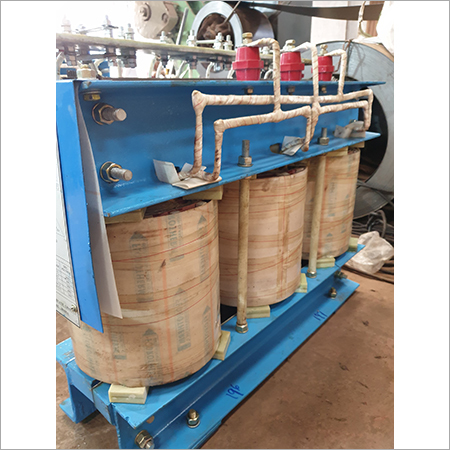
Tell us about your requirement

Price:
Quantity
Select Unit
- 50
- 100
- 200
- 250
- 500
- 1000+
Additional detail
Mobile number
Email

More Products in Dry Type Transformers Category
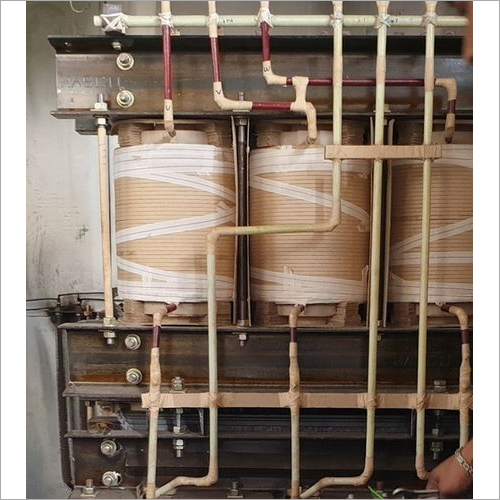
Three Phase Dry Type Transformer
Price 300000 INR / Piece
Minimum Order Quantity : 1 Piece
Usage : Industrial
Product Type : Dry Type Transformer
Phase : Three Phase
Voltage Booster Type : Other, Automatic / Manual (as required)

Contact Us
THERMOCOOL ENGINEERING PVT LTD
GST : 19AACCT0419M1Z6
GST : 19AACCT0419M1Z6

- Ramchandrapur Industrial Area, Ramchandrapur, P.O : Narendrapur,Kolkata - 700103, West Bengal, India
- Phone : 08045478712
- Mr Samya Chakravarty (Managing Director )
- Mobile : 08045478712
- Send Inquiry
 Send Inquiry

|


 Send Inquiry
 Send SMS
THERMOCOOL ENGINEERING PVT. LTD.
All Rights Reserved.(Terms of Use)
Developed and Managed by Infocom Network Private Limited.
Developed and Managed by Infocom Network Private Limited.

